
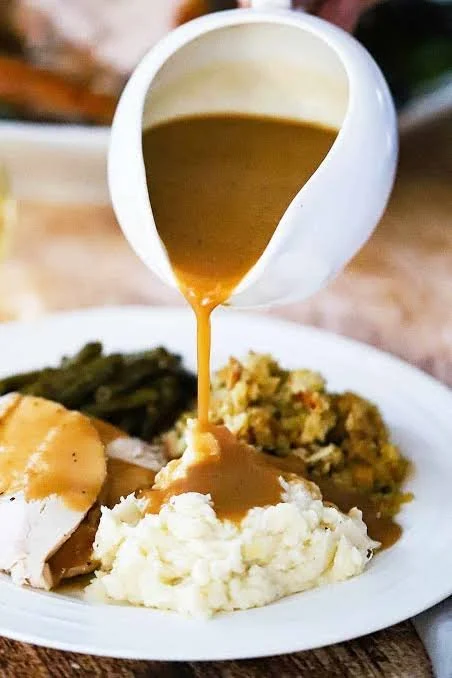
Great gravy, every time
Gravy deserves more attention than it usually gets. And the good news is that you can do most of the work before Thanksgiving Day.
My favorite approach is to prepare a turkey stock ahead of time, using turkey wings, necks, onions, carrots, celery and herbs. Simmer gently for two to three hours, strain and refrigerate.
For approximately 4 cups of gravy:
4 tablespoons turkey fat or butter
¼ cup all-purpose flour
4 cups warm turkey stock
Pan drippings, if available
Salt and freshly ground pepper
Melt the fat in a saucepan over medium heat. Whisk in the flour and cook for 2–3 minutes, stirring constantly. Slowly whisk in the warm stock, adding a little at a time to prevent lumps. Simmer until smooth and thickened, approximately 8–10 minutes. Add strained pan drippings, taste and adjust the seasoning.
A few gravy-saving tricks: If it's lumpy, strain it. If it's too thick, add stock. If it's too thin, simmer a little longer or add a small amount of cornstarch mixed with cold water. If it tastes flat, a little more salt or a splash of lemon juice may help.
Version 1: Turkey Gravy with Cornstarch
Makes approximately 4 cups | 8–10 servings
Ingredients
4 cups turkey stock or broth, including defatted roasting-pan juices
3 tablespoons cornstarch, plus more if needed
¼ cup cold water
Salt and freshly ground black pepper, to taste
Optional: 1 tablespoon unsalted butter for finishing
Directions
After removing the turkey from the roasting pan, pour the drippings into a fat separator or measuring cup. Skim off most of the fat, reserving the flavorful juices.
Add enough turkey stock to the pan juices to make 4 cups of liquid.
Pour the liquid into a saucepan and bring to a gentle simmer over medium heat.
In a small bowl, whisk the cornstarch with the cold water until completely smooth.
Slowly pour the cornstarch mixture into the simmering stock, whisking constantly.
Simmer gently for 1–2 minutes, until the gravy thickens and becomes glossy.
Taste and season with salt and pepper. For a richer finish, whisk in a tablespoon of butter just before serving.
Amy's tip: Start with 3 tablespoons of cornstarch. If you prefer thicker gravy, mix another teaspoon or two with a little cold water and whisk it into the simmering gravy. Remember that gravy thickens slightly as it cools.
Version 2: Classic Turkey Gravy with Flour
Makes approximately 4 cups | 8–10 servings
Ingredients
4 tablespoons turkey fat or unsalted butter
¼ cup all-purpose flour
4 cups warm turkey stock or broth, including defatted pan juices
Salt and freshly ground black pepper, to taste
Directions
In a medium saucepan, melt the turkey fat or butter over medium heat.
Add the flour and whisk continuously for 2–3 minutes, until the mixture is smooth and lightly golden. This is called a roux, and cooking it removes the raw flour taste.
Slowly add the warm stock, a little at a time, whisking constantly to prevent lumps.
Bring to a gentle simmer and cook for 5–10 minutes, stirring occasionally, until the gravy reaches your desired consistency.
Taste and season with salt and pepper.
Amy's tip: For deeper flavor, cook the roux a little longer until it's golden brown. Just remember that the darker a roux becomes, the less thickening power it has.
Five Tips for Better Thanksgiving Gravy
Don't throw away the browned bits. Those little bits stuck to the bottom of the roasting pan are packed with flavor. Add a little warm stock and scrape them up before adding the liquid to your gravy.
Make your stock ahead. Simmer turkey wings or necks with onion, celery, carrots and herbs a day or two before Thanksgiving. Strain and refrigerate promptly. You'll have a flavorful base ready to go.
Be careful with salt. Turkey drippings can be quite salty, especially if the turkey was brined. Taste before seasoning.
Keep it smooth. Strain the gravy before serving if you want a perfectly silky consistency.
Make plenty. I plan on at least ⅓ cup per person, but ½ cup is even better if you're serving mashed potatoes and stuffing. Leftover gravy is always welcome.
Can you make gravy ahead?
Absolutely, and I encourage it.
For flour-thickened gravy, make the entire recipe up to two days ahead, cool it promptly and refrigerate. Reheat gently, adding a little stock if it becomes too thick.
For cornstarch gravy, make the stock and gravy base ahead, but wait until Thanksgiving Day to thicken it. Cornstarch gravy can become thinner or lose its smooth texture after refrigeration and reheating, particularly if boiled repeatedly.
When you're ready to serve, bring the stock to a simmer and whisk in the cornstarch slurry. It takes only a few minutes.
One final suggestion for the feature: I'd include a note that deep-fried turkey doesn't produce roasting-pan drippings, so readers choosing that method should prepare a flavorful turkey stock in advance. It makes all the difference.
A note about gravy…..
Don't feel obligated to make homemade turkey stock. A good-quality purchased stock makes excellent gravy, particularly when you add the flavorful juices from your roasting pan.
I recommend unsalted or low-sodium turkey stock so you can control the seasoning. Chicken stock works perfectly well, too.
For a richer flavor, simmer purchased stock with a few fresh thyme sprigs, a bay leaf and some onion for 20–30 minutes, then strain. If you have turkey drippings, add them just before thickening.
My preferred method to thicken gravy is with cornstarch, not flour. I think it makes a prettier gravy than flour-thickened.
The goal is a delicious meal and a relaxed host. I don't think anyone needs to feel guilty about using a shortcut that works.
